The Edgewood Waterfront Preservation Association looks after an "End of the Line" trolley monument at Stillhouse Cove, and it has had the metal sculpture sanded and recoated after several winters of weather. The association has also shared a 1952 schedule for the Edgewood–Eddy Street line, a trackless trolley that turned around in what is now Stillhouse Cove Park. Edgewood's lots, houses and storefronts were arranged around that line decades before the monument went up.
Buyers looking at Edgewood this winter are mostly choosing among houses built for streetcar commuters. Lot width, which way a house faces the street, whether there is a garage, and how far the house is from Broad Street were all settled by about 1930. Those details set one Edgewood listing apart from another more than its kitchen finishes do.
The rails came before the plats
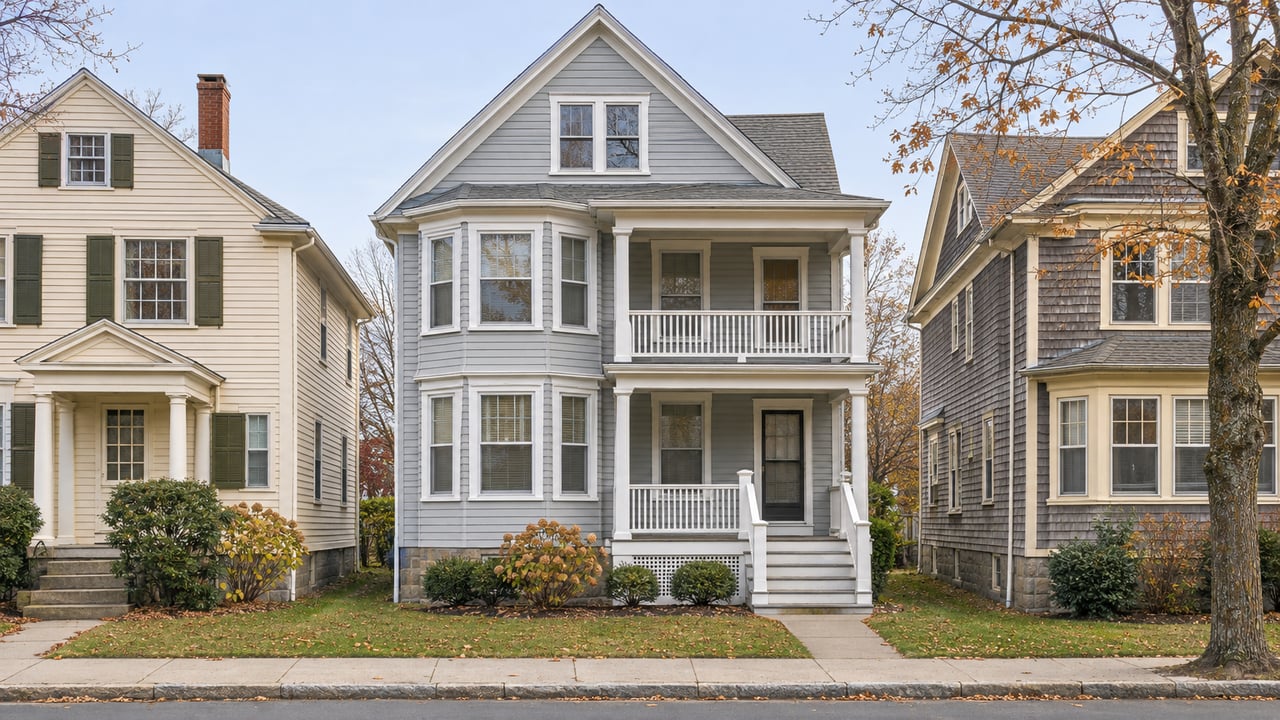
Broad Street got a horsecar line in 1868. Building picked up after that and then took off once the line switched to electric trolley service in 1892. The Taft Estate Plat, the roughly 14-acre subdivision between Broad Street and Narragansett Boulevard above Stillhouse Cove, was platted in 1904. About 85 percent of its buildings date from 1905 to 1930, and its original lots average just over 5,400 square feet, with a range of about 4,100 to 8,300. Circuit Drive, Stratford Road, Windsor Road and Selkirk Road have Queen Annes, Colonial Revivals, Shingle-style houses, bungalows, foursquares, Dutch Colonials and Tudor Revivals, plus two-deckers and three-deckers. The National Register nomination describes most of them as one- to three-family buildings.
Edgewood beyond the Taft plat follows the same pattern. Most of it went up between about 1890 and 1930 as a patchwork of subdivisions, with most lots between 4,000 and 10,000 square feet. Citywide, Cranston's draft Housing Element puts about 30 percent of housing units before 1940 and 62 percent as detached single-family units. The Taft plat, where most buildings date from 1905 to 1930 and many hold two or three families, is older and more mixed than those citywide shares.
What a narrow lot decides
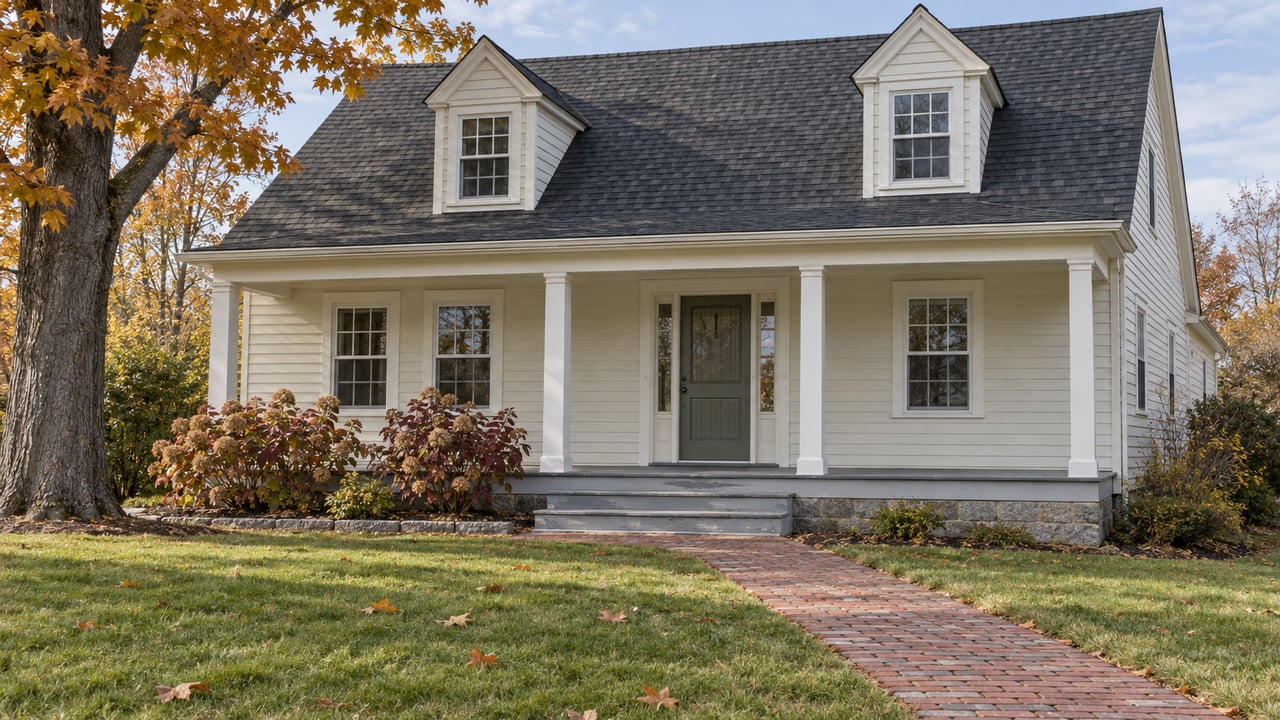
The narrow frontage still shows in how the houses sit. The nomination describes a 1974 ranch on Narragansett Boulevard set end-to-street, because streetcar-suburb lots are too narrow for a ranch's usual broad-side placement. Where garages were added, they often sit at the back of the lot, like the detached two-car garage with a high hip roof recorded beside another house in the survey.
Two Edgewood houses with similar square footage can be very different purchases because of this. One may have a long side driveway running to a back-lot garage, while the next fills most of its frontage. One sits on a 4,100-square-foot lot, and a house of the same age a few streets over may have twice the yard. On a two-family or three-family, the shape of the lot sets how much yard, storage and off-street parking each unit gets. Walk the whole lot before deciding whether the house is the right size.
Older housing also puts renovation money in particular places. A garage built in the 1910s or 1920s may be sound, may need a new roof or slab, or may need rebuilding. A house set end-to-street on a narrow lot has little room to expand sideways. Pricing those conditions before an offer is part of comparing one Edgewood house with another.
Shops at the old stops
Broad Street's commercial blocks follow the old trolley stops. Stores and offices clustered at Broad and Wheeler, Broad and Norwood, and Broad and Shaw, where commuters could run errands on the walk home. Later buildings were placed with parking in mind, and the Art Deco block at 1816-20 Broad Street is the survey's example of auto-era commercial architecture. The same survey names Broad Street as Edgewood's commercial and institutional spine, with the William H. Hall Library, St. Paul's Church, the Palace Theatre and the Leo Logan Block among its landmarks.
Newer businesses keep opening in the same corridor. The Providence Journal covered the March 2025 opening of Ming's on Broad at 1864 Broad Street, which grew out of the Ming's Asian food truck. When comparing streets, measure the walk from each house to the nearest of the Wheeler, Norwood and Shaw clusters.
The waterfront end follows the same plan. The survey identifies the Edgewood Yacht Club at the foot of Shaw Avenue and the Rhode Island Yacht Club in Stillhouse Cove as visual anchors of the neighborhood. The Edgewood Waterfront Preservation Association, the City of Cranston and Save the Bay have announced a Stillhouse Cove shoreline restoration supported by a $59,150 grant, with coir logs and native plantings among the planned measures.
The bus that runs where the trolley ran
RIPTA's R-Line, Broad/North Main, runs the corridor today on a schedule effective January 17, 2026, with a Broad Street terminus. The published R-Line schedule lists service at least every 12 to 15 minutes in the busiest morning, midday and evening hours, every 20 minutes on weekends and every 30 minutes at night. A house a few blocks off Broad Street still has frequent service toward Providence, which is what the original plats were built to provide.
Broad Street's next round of planning
The city is also planning ahead for the corridor. At its August 4, 2026 meeting, according to the Cranston Plan Commission's minutes, Planning Director Beth Ashman reported on the Mixed-Use Centers and Corridors Project, a state housing grant study with consultants Kittelson & Associates. The study calls Broad Street a "historic, transit-rich corridor requiring context-sensitive design standards." The minutes expect draft deliverables in late 2026 and City Council review and adoption in 2027.
At the same meeting, the commission heard a request for 1594-1596 Broad Street, a 4,118-square-foot lot that the planning staff memo places in Northern Edgewood. The owner wanted to convert a building with two apartments and a former dental office into a three-family home. Staff supported it as compatible with the multifamily houses around it. Commissioner Lanphear cited off-street parking shortages in Northern Edgewood, and the commission voted 5-2 to send a negative recommendation to the Zoning Board. Both items on that agenda concerned the trolley-era layout, with buildings close together on small lots along a busy transit street.
What this looks like at a showing
Cranston homes are selling quickly, so buyers make these calls fast. State-Wide MLS figures put Cranston's single-family median at $500,000 for the third quarter of 2026, on 187 sales averaging 26 days on market. In September 2026 alone, the citywide median was also $500,000, on 59 sales averaging 25 days on market. Statewide, RI REALTORS reported a September 2026 single-family median of $534,000 and 2.9 months' supply. The Cranston figures cover the whole city and are not Edgewood comps. At under a month on market, though, a buyer may get only one showing to judge a lot's frontage, the state of a back-lot garage and the walk to Broad Street.
That makes the preparation before showings more useful than a second look at listing photos. Figure out which of the Wheeler, Norwood and Shaw clusters you want to be near, which lot widths fit your household and cars, and what a century-old garage or porch could cost to put right. Buyers who arrive with those answers can judge an Edgewood house in the time the market gives them.
If you are weighing an Edgewood two-family or a house on one of the Taft plat streets, Lindsay Pettinelli brings a Rhode Island general contractor's eye to narrow lots, older garages and early-1900s porches, so their condition is part of the number before you make an offer. Owners on those streets thinking about selling can request a free home valuation to begin the conversation.