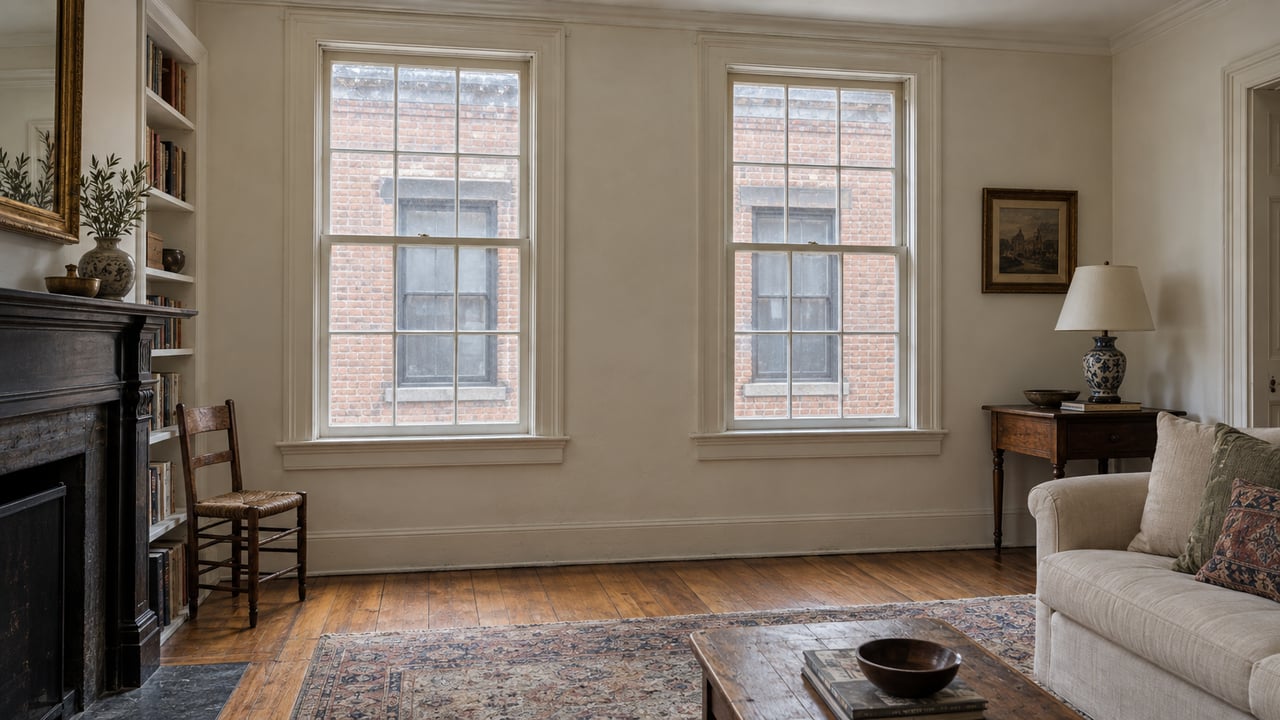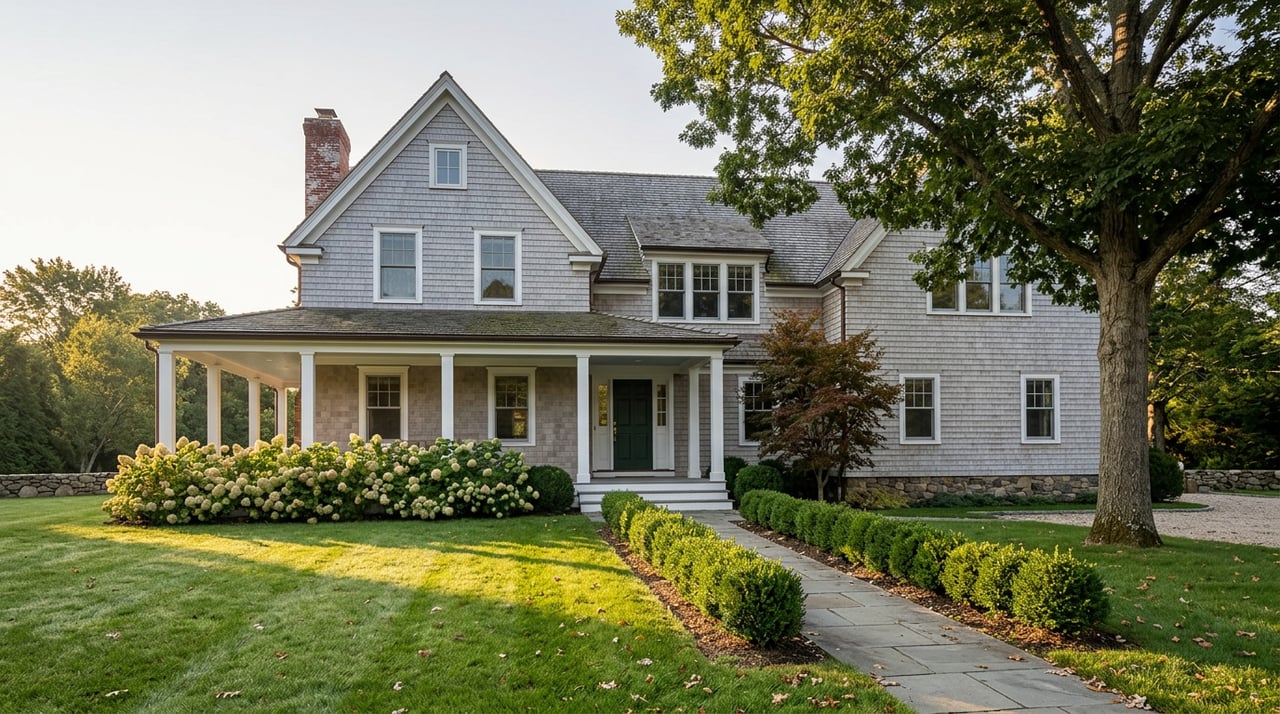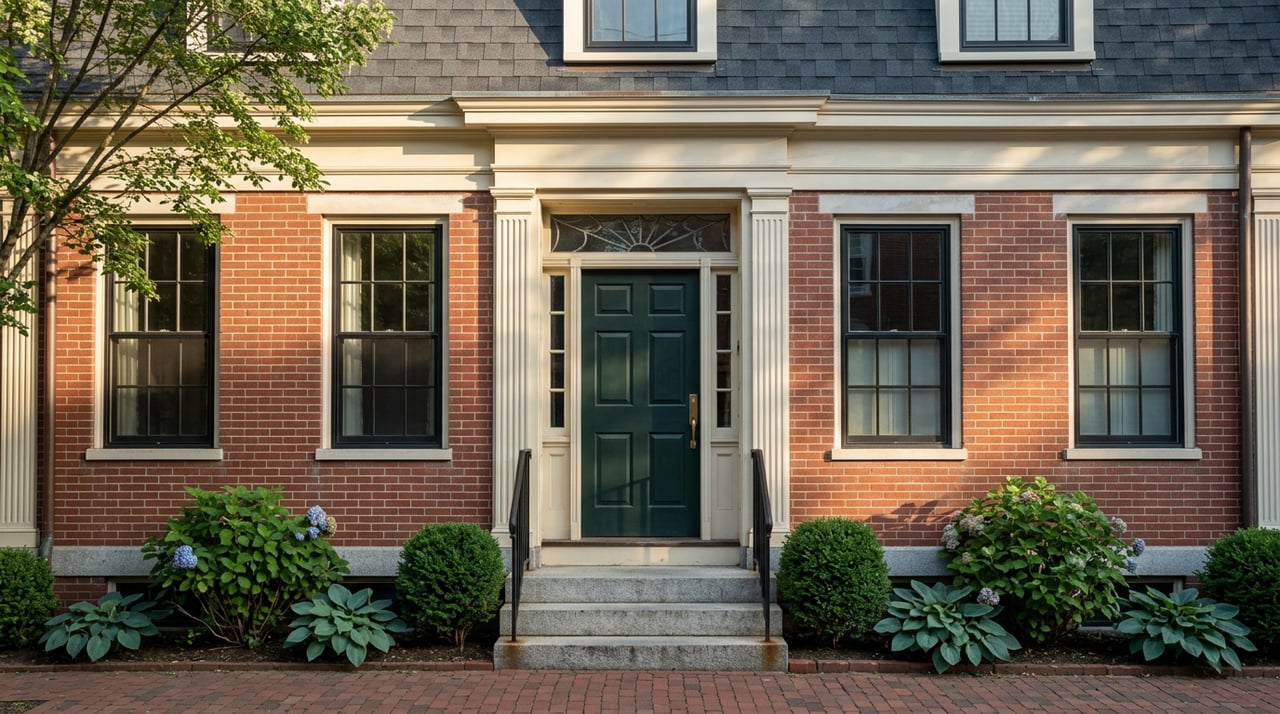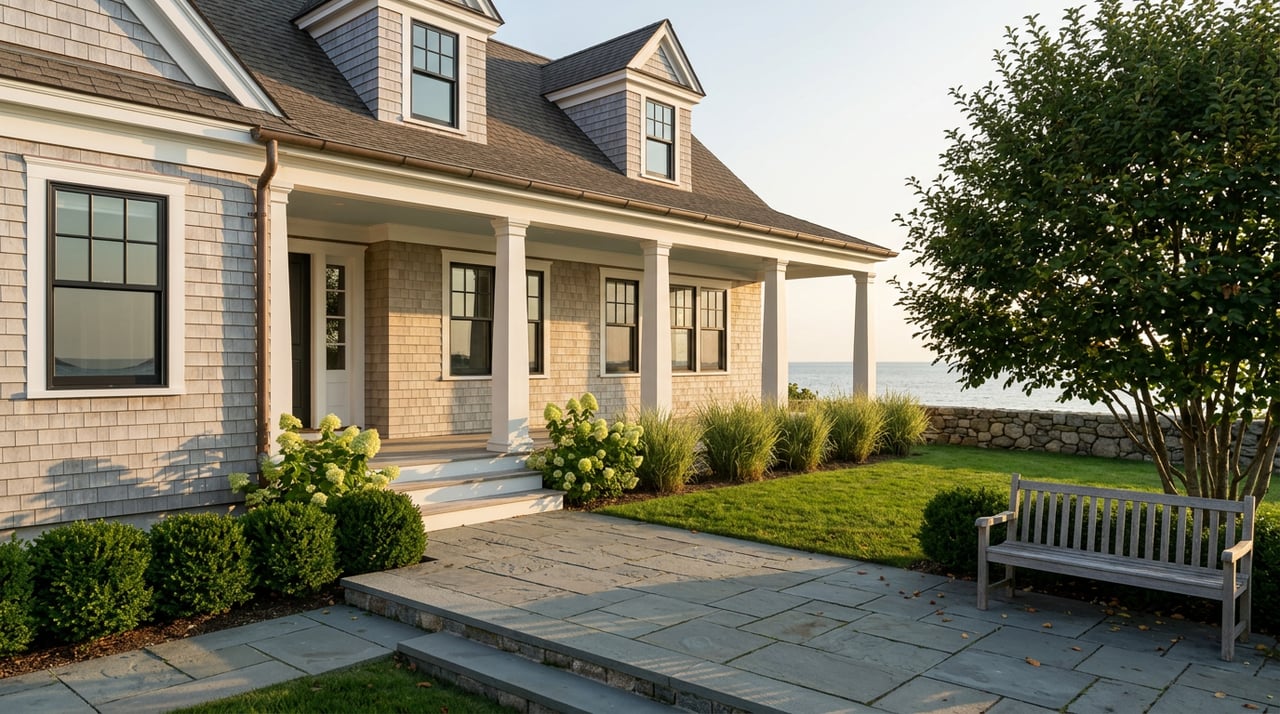
Stand at India Point Park in Providence and look east across the Seekonk River. You can see East Providence's waterfront clearly: the same water, the same sky, a bike path that runs unbroken from one shore to the other. In February 2026, a median home in East Providence sold for $435,000. Cross that river to Providence's East Side and the median home that same general period sold for close to double.
Most explanations for that gap stop at vibes. A local architecture critic once put it bluntly in a piece for GoLocal, arguing that East Providence gets overlooked by wealthy homebuyers simply because it isn't the East Side, and that the neighborhood might be the best remedy for what he called the East Side's own pricing problem. That's a fair observation about buyer psychology. But it isn't the whole mechanism, and if you're actually comparing these two shorelines as a place to put your money, the psychology isn't the part that should worry you or excite you. The infrastructure should.
The bridge that used to make this one market
The Washington Bridge carries Interstate 195 across the Seekonk River, connecting India Point in Providence to Watchemoket Square in East Providence. For most of the last century, crossing it took a few minutes. On December 11, 2023, the westbound span was shut down without warning after engineers found critical failures in bridge components dating to the 1960s. What officials first described as a repair measured in weeks turned into a full demolition and rebuild.
That rebuild is still not finished. Crews began driving the first of 32 foundation shafts into the riverbed in June 2026, more than two and a half years after the closure. Rhode Island's governor originally promised a 2026 reopening. State transportation officials have since moved that target to November 2028. In the meantime, all I-195 traffic in both directions runs on the older eastbound span, a structure never designed to carry that load, with narrowed lanes and no shoulder for breakdowns. State data reported by the Boston Globe counted 173 breakdowns and 127 crashes on that single span in roughly seven months of tracking.
This matters for the price gap because it changes what "across the river" actually means in practice. A five minute crossing that occasionally backs up is a rounding error in someone's day. A crossing that regularly turns into a bottleneck, that schools in East Providence had to work around with early dismissals in the first days of the closure, and that has now stretched into a five year infrastructure project, is a different kind of friction. It doesn't show up in a median price chart. It shows up in the decision a commuter makes every single morning about whether the East Side's proximity to downtown Providence is actually worth what it costs, when getting there and back has gotten measurably harder.
The bike and pedestrian path across the river, known as the George Redman Linear Park, has stayed open throughout the closure. It's a pleasant way to get across on foot or by bike. It is not a substitute for a car commute, and it hasn't stopped the vehicle bottleneck from reshaping how people think about which side of the river to live on.
What the numbers actually say, and what they don't
Here's where the comparison gets more honest than the "perception paradigm" framing allows. The most complete East Side neighborhood figures available show a median sale price of $849,000 in June 2025, up 6 percent year over year at the time. East Providence's own figures are fresher: a median of $435,000 in February 2026, up 2.4 percent year over year, with homes selling in 23 days on average compared to 43 days the year before.
I want to be direct about what that pairing does and doesn't tell you. The East Side number is now more than a year old, and neighborhood-level data updates less consistently than citywide figures. What we do have that's current is the citywide Providence trend: over the three months ending May 2026, Providence home prices were up 7.3 percent compared to the same period the year before, with a median sale price of $580,000. That citywide number is running hotter than East Providence's own year over year gain. If anything, that suggests the East Side to East Providence gap hasn't been closing. It's more likely held steady or widened slightly, even with a bridge closure sitting in the middle of the story.
| East Providence | Providence's East Side | |
|---|---|---|
| Median sale price | $435,000 (Feb 2026) | $849,000 (June 2025) |
| Year over year change | +2.4% | +6.0% |
| Typical days on market | 23 days | 16 days |
The tax math nobody mentions until closing
There's a second mechanism working underneath the price gap that has nothing to do with bridges: the two cities tax owner-occupied homes very differently, and the headline rates make the gap look bigger than it actually is.
East Providence's 2026 residential tax rate is $13.35 per $1,000 of assessed value, according to the city's own assessor's office. Homeowners who file for the city's homestead exemption get a 14 percent reduction in assessed value, which brings the effective rate down to $11.48 per $1,000.
Providence's residential rate is commonly cited around $26.75 per $1,000, nearly double East Providence's nominal number. But Providence also runs one of the most generous owner-occupied homestead exemptions in the country: a roughly 40 percent reduction in assessed value for a primary residence, according to the city's own exemptions program and independent tax analyses.
Run the math on a simple example. A $400,000 assessed home in East Providence, after the 14 percent homestead exemption, is taxed on $344,000 of value. At $13.35 per $1,000, that's about $4,592 a year. The same $400,000 assessed home in Providence, after the 40 percent exemption, is taxed on $240,000 of value. At $26.75 per $1,000, that's about $6,420 a year.
The nominal rate gap between the two cities looks like it should roughly double a buyer's carrying cost. After both cities' exemptions are applied, the actual gap for an owner-occupant is closer to 40 percent, not 100 percent. That's a meaningfully smaller number to build a budget around, and it's the kind of detail that surfaces during a mortgage pre-approval conversation, not during a scroll through listing photos.
The investment that isn't waiting on the bridge
None of this has slowed down what's actually getting built on the East Providence side of the river. The most visible example is Kettle Point, a 48-acre waterfront community built by Churchill & Banks and its Noble Development subsidiary on the site of a former petroleum tank farm that operated from 1930 to 1985. What was once a fenced-off, contaminated industrial site now includes 62 condominium residences, several apartment buildings, a medical office building occupied by University Orthopedics, and public amenities the city required as part of the development's tax increment financing deal: a public beach, a rebuilt fishing pier on the site of an old oil offloading dock, and direct access to the East Bay Bike Path. The East Providence Waterfront Commission's 2024 annual review, delivered by Commission Chair William J. Fazioli, put the district's current assessed property value at more than $98 million, generating close to $784,000 for the city's general fund that year.
A few other pieces of the waterfront corridor worth knowing if you're looking at this stretch of shoreline:
- East Point, a 392 unit residential development at 300 Bourne Avenue, was under construction as of the most recent reporting on the project, built by Noble Development LLC as part of the same waterfront push.
- Bold Point Park continues to host a seasonal concert series each year from May through October, run by RI Waterfront Events in partnership with Live Nation New England.
- A permanent 5,000 capacity amphitheater has been promised for the adjacent parcel since 2022. That timeline has slipped more than once, first from 2024 and then again from an initial summer 2026 target, in a pattern that will sound familiar to anyone following the bridge project.
That last point is worth sitting with. Two of the biggest infrastructure promises tied to this stretch of river, the bridge and the amphitheater, have both run years behind their original timelines. If you're weighing East Providence against the East Side on the assumption that some near term event will suddenly close the price gap, the recent track record here argues for patience rather than urgency.
A few direct questions
When will the Washington Bridge actually reopen? State officials began foundation construction in June 2026 and have set November 2028 as the current target for the rebuilt westbound span, nearly five years after the original closure. Given how many times this timeline has already moved, treat that date as a planning estimate rather than a certainty.
Does East Providence's lower tax rate mean every buyer pays less than they would in Providence? Not automatically. East Providence's nominal rate is lower, but Providence's homestead exemption is more generous. For an owner-occupant, the real gap in carrying costs is smaller than the sticker rates suggest, though East Providence still comes out ahead in the math above. Anyone comparing offers should run their own numbers against each city's current assessor figures rather than relying on the headline rate alone.
If you're weighing a home on either side of the Seekonk River and want help thinking through what the bridge timeline, the tax mechanics, or a specific property's numbers actually mean for your budget, Lindsay Pettinelli works this waterfront corridor from both banks and can walk you through it. Request a free home valuation to start with real numbers instead of guesswork.