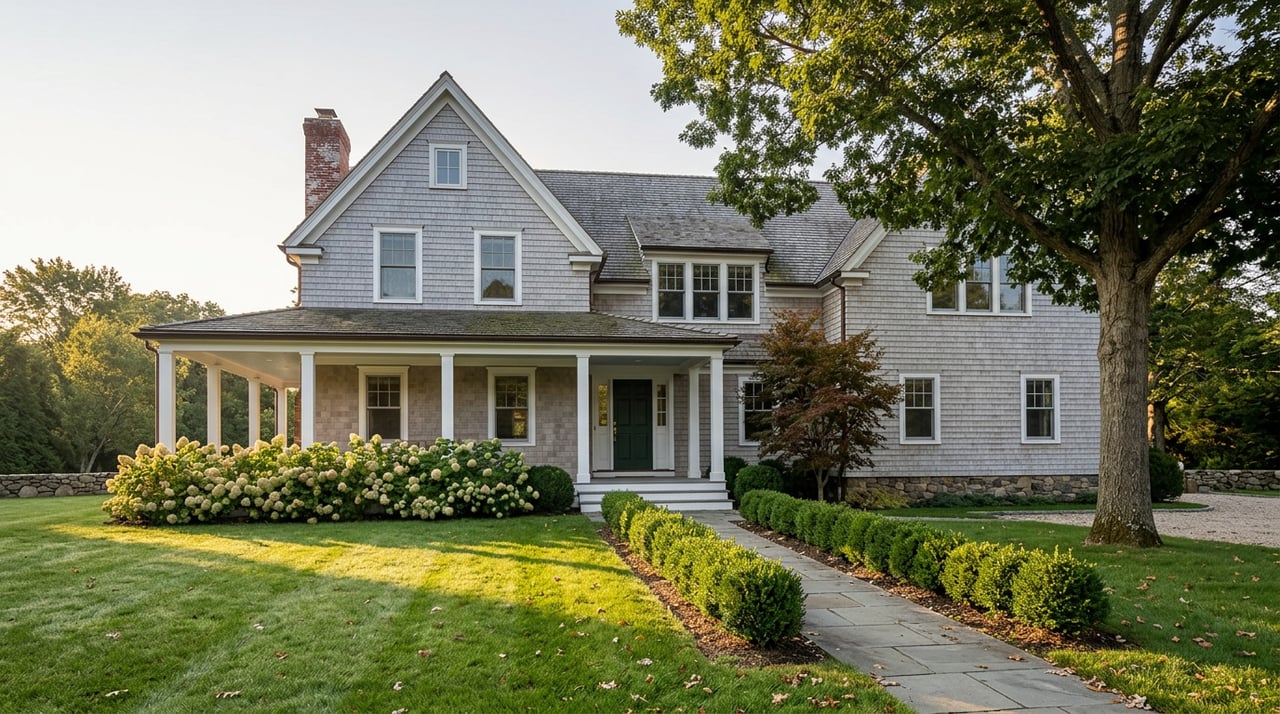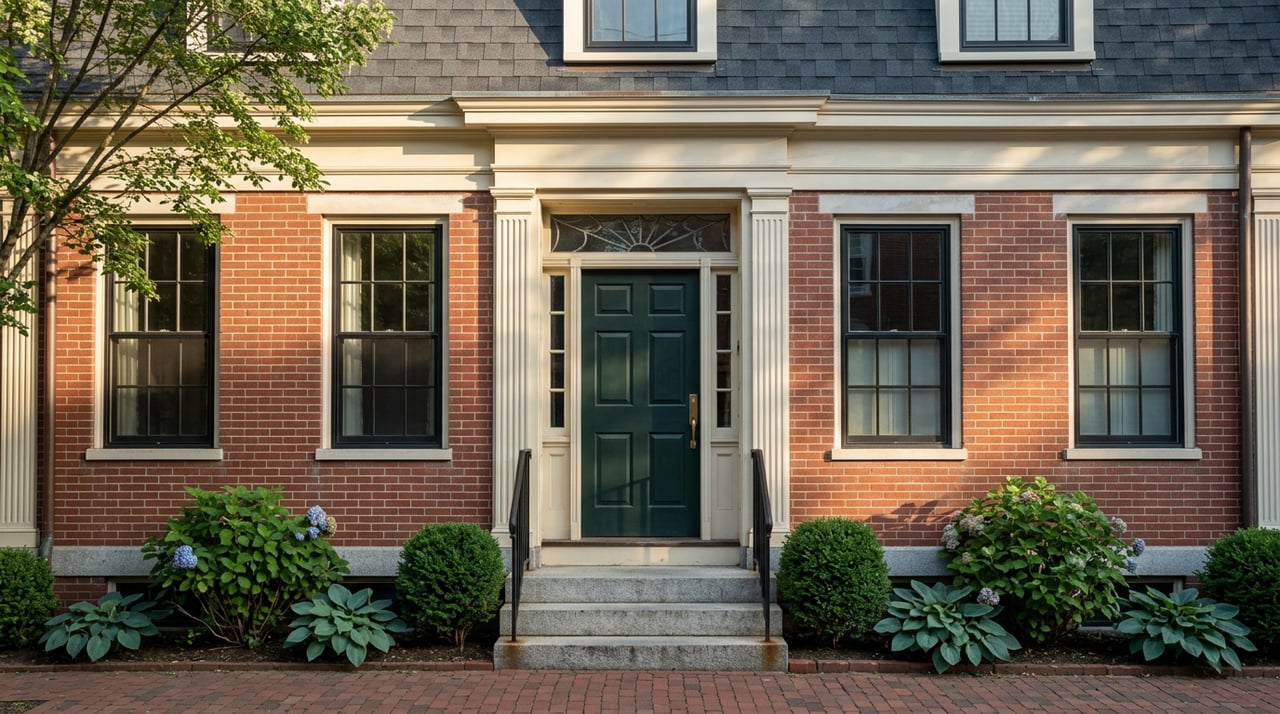
A two-family house on Cushing Street in College Hill closed this year for nearly $1.83 million, the second-highest multifamily sale in Providence County so far in 2026. It is not a mansion. It is a duplex built in 1848, a seven-room main house with an attached six-room townhouse unit, about 5,145 square feet total. The city's own assessor had it valued at $1.6 million the year before the sale.
That number matters more than it used to. As of July 1, 2026, Rhode Island charges a new statewide tax on residential property assessed above $1 million if that property is not occupied by its owner for at least 183 days a year. Everyone calls it the Taylor Swift Tax, after the pop star's Watch Hill estate, and most of the national coverage has treated it as a story about oceanfront compounds in Newport and Little Compton. On College Hill, it is a story about a duplex.
What the tax actually charges
The mechanics are specific. The state levies $2.50 for every $500 of assessed value above $1 million, which works out to $5 per $1,000. It applies to the assessed value as of December 31, 2024, the same figure your city uses to calculate your regular property tax bill, not the price you paid or the number a listing agent puts in a marketing sheet. The exemption is occupancy-based: if you or a documented resident live in the home 183 days or more, or if the property is rented under a written agreement for 183 days or more and falls under Rhode Island's landlord-tenant law, the tax does not apply.
Run that formula against real 2026 East Side sales and the numbers stop feeling abstract:
| Address | 2025/2026 assessed value | Additional annual tax if non-owner-occupied |
|---|---|---|
| 251 George St. carriage house | $1.52 million | about $2,600 |
| 5-7 Cushing St. duplex | $1.6 million | about $3,000 |
| 6 Olive St. single-family | $2.1 million | about $5,500 |
| 102 Prospect St. single-family | $2.9 million | about $9,500 |
None of these are Watch Hill numbers. They are ordinary College Hill closings from this year, and each one now carries a five-figure or four-figure question that didn't exist before July.
Why this isn't a coastal story here
The reason the East Side clears this bar so easily traces back to the city's own 2026 revaluation, which used that same December 31, 2024 assessment date. According to figures reported by GoLocalProv from the city's assessment data, the average assessed value of a single-family home in Ward 1, which covers Fox Point, portions of Wayland Square, College Hill, the Jewelry District and downtown, rose 36 percent to $1,125,487. Ward 2, which takes in Blackstone and more of College Hill and Wayland, rose 33 percent to an average of $1,269,784 for single-family homes, and its three-family properties averaged $1,268,344.
Those are averages, not high-end outliers. Half the single-family stock in those wards sits above those numbers. When a state tax triggers at $1 million in assessed value and a neighborhood's typical home already assesses above $1.2 million, the tax stops being a luxury surcharge and becomes a standard line item for anyone buying there without plans to live in the place.
The sales themselves back this up. The 102 Prospect Street Colonial Revival sold for $3.4 million, one of the five highest single-family sales in Providence this year, and the buyer took title through a Boston-based trust rather than as an individual owner-occupant. The 6 Olive Street Greek Revival, by contrast, sold to two named individuals who appear to be Providence residents, the kind of purchase far more likely to clear the 183-day owner-occupancy test. Same neighborhood, same price bracket, very different tax exposure depending on who actually lives there and for how long.
The detail that decides who owes it
This is where the mechanism gets more useful than the headline number. The tax does not target investment property as a category. It targets a specific occupancy fact pattern: not lived in by the owner, and not leased long-term.
That distinction matters enormously for College Hill's ordinary rental stock. A two-family or three-family house rented to tenants on standard 12-month leases, the kind that dominate the blocks near Brown University and RISD, clears the 183-day rental exemption without difficulty. A year of tenancy is 365 days. Even a nine-month academic lease typically runs past 270 days. Most conventional multifamily landlords in this market were never the intended target and likely qualify for the exemption without changing anything about how they operate.
The exposure sits somewhere else. It sits with a single-family house bought by an out-of-state parent as a place for a Brown student to live part of the year, used seasonally rather than leased. It sits with a trust or LLC purchase like the one on Prospect Street, where no individual has yet established the property as a documented primary residence and no long-term lease is in place. It sits with a property mid-renovation between closing and resale, occupied by no one for months at a stretch. In each of these cases, the property is technically an investment or a second home in the way people usually talk about those terms, but the tax doesn't care about the label. It cares about the calendar and the paperwork.
The second tax nobody mentions at closing
Providence buyers and sellers on the East Side are also dealing with a local version of the same idea that predates the state tax by years. Rhode Island law lets Providence split its residential tax classes by occupancy, and the city has used that authority for a while: one-unit and two-to-five-unit residential property are each divided into owner-occupied and non-owner-occupied rate categories, according to the state statute governing Providence's tax classification. The gap this creates can be significant. In the city's other classes, commercial property was taxed at $29.20 per $1,000 of assessed value in fiscal 2026, 3.5 times the $8.40 rate applied to owner-occupied single-unit homes, a difference of $20,800 a year on a $1 million property, according to the Rhode Island Public Expenditure Council's analysis of statewide tax rates.
The city council fought over a version of this same tension in its own FY26 budget. The mayor's original proposal would have raised bills on owner-occupied two- and three-family homes by an average of 16 percent. The council's finance committee, chaired by Helen Anthony, negotiated that down to a flat 6 percent increase for both owner-occupied single-family and owner-occupied 2-to-5-unit homes, a change city officials said would save small landlords and their tenants more than $400 on average. The fight was entirely about how much weight occupancy status should carry in the tax bill, months before the state's non-owner-occupied tax existed as a second layer on top of it.
Michael Pereira, president of the Rhode Island Association of Realtors, put the concern plainly when the state tax took effect this July: "I just feel like the way we're going about it, we're deterring people to want to invest in Rhode Island." Whatever one thinks of the policy, the practical point for a buyer is that Providence now has two separate systems, city and state, that both ask the same question about a property before setting the bill: who lives here, and for how long.
A few questions worth asking before you close
For anyone evaluating a College Hill, Wayland Square, or Fox Point purchase this fall, a handful of questions matter more than they did a year ago:
- What is the property's assessed value as of December 31, 2024, not the asking price or a prior year's number
- Will the buyer or a documented resident occupy the home at least 183 days in the coming privilege year
- If the plan is to rent it, is there a written lease covering 183 days or more, and does it fall under Rhode Island's landlord-tenant law
- If the property is being purchased through a trust or LLC, who is the individual expected to establish residency, and what documentation will support that claim
- If buying from a seller who may owe the tax, has a Certificate of No Tax Due been requested from the Division of Taxation before the transfer
None of these questions change whether a house on College Hill is worth buying. They change what it costs to own it the way you're planning to own it, and on the East Side in 2026, that plan is the whole calculation.
If you're weighing a purchase or a sale on the East Side and want the occupancy and financing math worked through before you write an offer, Lindsay Pettinelli can walk you through what a specific address actually owes, and what it wouldn't, under both the new state tax and the city's existing rate structure.