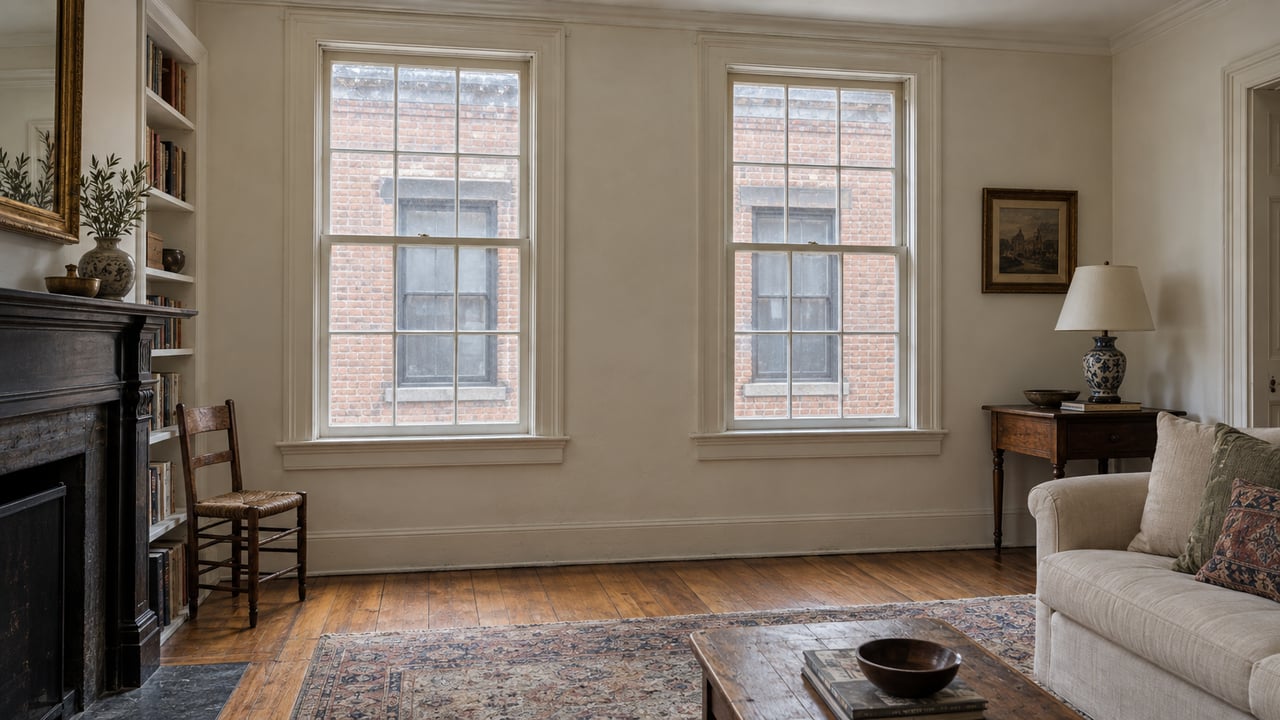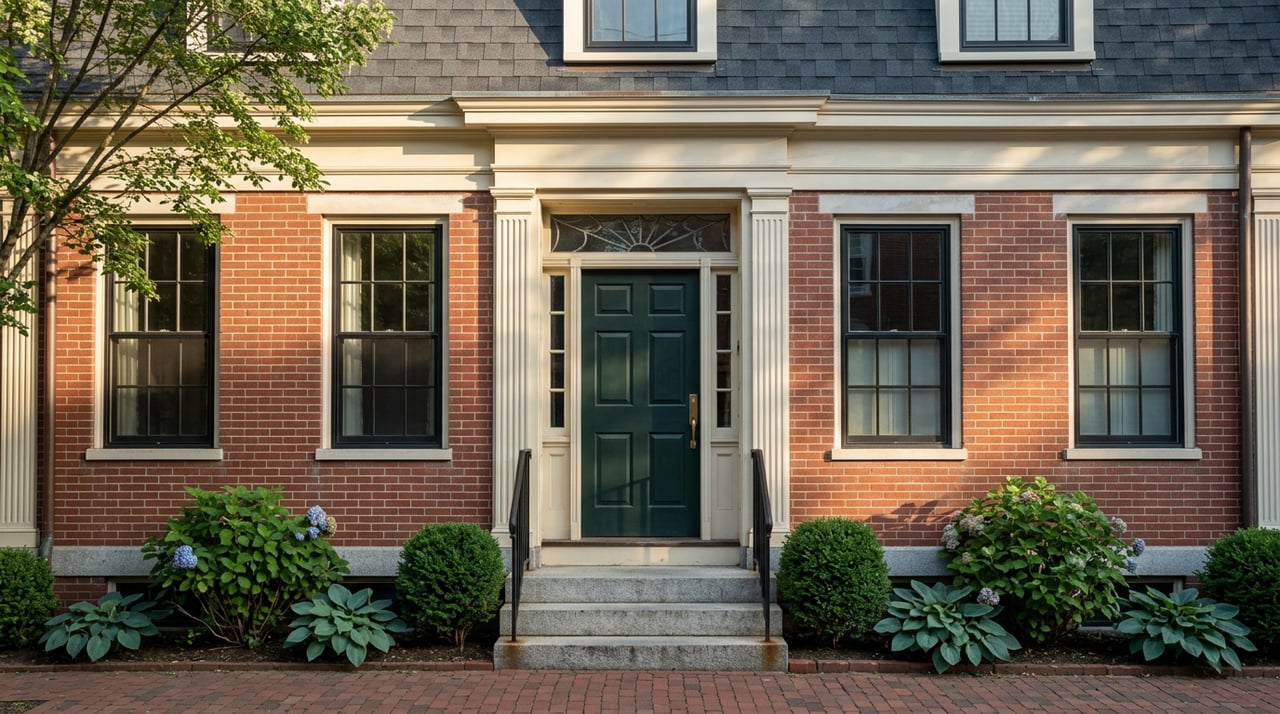
In March 2021, a contractor's crew took less than two weeks to bring down a two-hundred-year-old colonial at 312 Wickenden Street in Fox Point. The building had housed a restaurant called Duck and Bunny. It sat inside the College Hill National Historic District, the same federally recognized district that includes Benefit Street's Mile of History. That listing did nothing to stop the demolition permit from being issued, or the building from coming down two weeks later. The lot sat empty for years afterward.
A few blocks away, on streets governed not just by a National Register listing but by Providence's local historic district overlay, homeowners can't replace a window sash without a staff sign-off. The difference between those two outcomes has nothing to do with how old or how charming a house is. It comes down to a jurisdictional line most buyers never think to check before they fall for a listing.
That's the piece of the Providence historic-buying story that gets skipped in most guides: the word "historic" is doing three different jobs at once, and only one of them comes with teeth.
Three Tiers, One Word
Providence buyers run into "historic" in three separate contexts, and each one carries a different set of consequences for a renovation plan or an offer.
| Designation | What it actually does | Demolition protection |
|---|---|---|
| Local Historic District (overseen by the Providence Historic District Commission) | Requires a Certificate of Appropriateness for exterior work before a building permit can issue | Yes, subject to commission review |
| National Register Historic District | Opens access to federal and state tax credits on qualifying rehab work | No, unless local funding or permits are also involved |
| Old building, no formal designation | Nothing procedural attaches to the property | No |
Providence has nine local historic districts covering roughly 2,635 properties, a structure the city created back in 1960 under state law to protect the physical character of specific neighborhoods. College Hill is the largest of the nine by property count, with more than 900 addresses inside it. But College Hill's national designation and its local designation cover overlapping but not identical ground, which is exactly why a National Register-listed colonial on Wickenden Street could come down while a house two streets over, inside the local overlay, can't have its trim color changed without paperwork.
What a Certificate of Appropriateness Actually Touches
Once a property sits inside one of Providence's nine local districts, the review is narrower than most buyers expect. Interior work, including kitchen and bath renovations, isn't reviewed at all. Paint color is exempt too. At a 2024 Fox Point ward meeting on the neighborhood's own designation push, the Providence Preservation Society's executive director told residents plainly that interior changes aren't regulated, that owners can paint their house any color, and that the commission has widened the range of window replacements it will approve.
What does get reviewed is anything visible from the street, meaning windows, doors, siding, roofing, additions, and fences. By law, the Providence Historic District Commission has 45 days from a complete application to decide. In practice, most applications are resolved in 30 days, and staff-level approvals for minor repairs and in-kind replacements often clear in under a week. Projects that require a full public hearing, additions, new construction, subdivisions, typically run four to eight weeks. If the commission denies an application, the owner has 20 days to appeal to the Zoning Board of Appeal, with further appeal routes through Superior and Supreme Court if it comes to that.
Those numbers matter for anyone budgeting a renovation timeline before closing. A buyer planning to swap out windows on a contributing College Hill property should plan for weeks, not days, and should sequence that review before ordering materials.
Two Files That Show How the Commission Actually Rules
The commission's track record is more predictable than "red tape" implies once you look at specific cases.
In 2024, developer Dustin Dezube of the Providence Group brought a preliminary proposal to build four new structures around the 1796-97 Captain George Benson House at 64 Angell Street, one of the city's better-preserved Federal-style mansions. The nearly 30,000-square-foot lot could, by zoning alone, be subdivided into as many as five lots. The commission denied the concept, finding that the proposed layout would leave only six feet between the historic house and its new neighbors on some sides, an arrangement it judged would have an adverse effect on both the house and the district around it.
Contrast that with a Broadway Historic District case from the same general period. A developer proposed a new three-unit mixed-use building on a long-vacant lot between the 1886 James T. Kennedy House and the Mrs. Margaret Gough House, both Second Empire homes with Queen Anne detailing. Commission review shaped the design before it moved forward, and the infill proceeded alongside the two historic houses rather than in place of them.
Read together, the two files say something useful to a buyer sizing up a lot next to a historic property: the commission isn't reflexively against new construction. It's evaluating scale and proximity to what's already there. A well-scaled infill proposal has a real path. A proposal that crowds a landmark house does not.
The Vote Fox Point Hasn't Finished
The clearest evidence that local designation is worth something sits in Fox Point right now, not in a case file from years ago.
After the Wickenden Street demolition, Ward 1 Councilman John Goncalves launched a formal signature drive in 2024 to create a brand-new local historic district covering roughly 300 properties between Brook Street and Governor Street, south of India Point Park. Under the rules, the drive needs signatures from 150 of the roughly 200 remaining owner-occupied properties in the proposed boundary to move forward. Early counts put the effort in the twenties to thirties, with a ward meeting drawing 75 to 100 residents, most of them supportive. A separate petition also circulated opposing the overlay, arguing that added review makes housing more expensive to maintain.
The Fox Point Neighborhood Association has told residents that a house inside a historic district generally sells for about 10 to 20 percent more than a comparable house outside one. That's the association's own estimate, not an appraisal-backed guarantee, but it lines up with what the market has actually been doing in Providence's protected districts lately. A circa-1885 home on Stimson Avenue, inside its own historic district on the East Side, sold for $1.95 million in August 2026. A 1920s Colonial Revival on Freeman Parkway, in a district shaped in part by the Olmsted Brothers' landscape design and added to the National Register around 1995, sold for $3.095 million in March 2026, a price that set the high mark for Providence County sales that spring.
Neither sale happened despite the historic designation. Both happened inside it.
What This Means Before You Write an Offer
If you're looking at an older Providence house right now, the practical questions aren't about the building's age. They're about its status:
- Is the property inside one of the nine local historic districts, or only within a National Register boundary? The city's GIS mapper and PHDC staff can confirm this before you write an offer.
- Is the structure listed as "contributing" or "non-contributing" to its district? Non-contributing structures, like the two buildings proposed for demolition near Wickenden and Brook in 2023, can bypass Historic District Commission review entirely and go straight to the City Plan Commission instead.
- If you're planning exterior work, have you built a 30-to-45-day review window into your renovation schedule, longer if the project needs a public hearing?
- Have you looked at the Rhode Island Historic Preservation Tax Credit? For certified historic structures, it covers 20 to 25 percent of qualified rehabilitation costs, with an additional federal 20 percent credit available for income-producing properties, provided the work meets the Secretary of the Interior's Standards and gets certified by the state preservation office.
None of this replaces a title search or an inspection. It's a layer most buyers don't think to check until they're already past the point of renegotiating, and it's the layer that actually determines whether the "historic charm" you're paying for is protected or just old.
A Few Direct Questions
Does a National Register listing stop a house from being torn down? No. It opens access to tax credits on qualifying work, but demolition protection only comes from a local historic district with an active Historic District Commission.
Can I paint my house any color I want inside a local historic district? Yes. Paint color and interior work, including kitchens and bathrooms, fall outside PHDC review.
How long should I plan for a straightforward exterior approval, like a fence or in-kind repair? Staff-level minor approvals often clear in under a week. Full commission review runs closer to 30 days, up to the 45-day statutory limit.
Buying an older home in Providence means buying into a specific set of rules, and those rules vary block to block in ways a listing photo won't show you. Working through which tier a property actually sits in, and what that means for your renovation timeline and budget, is exactly the kind of groundwork Lindsay Pettinelli does before a client writes an offer, drawing on an active Rhode Island general contractor registration to read what a Certificate of Appropriateness will and won't allow. If you're weighing a historic Providence property, reach out for a conversation before you fall for the next listing.