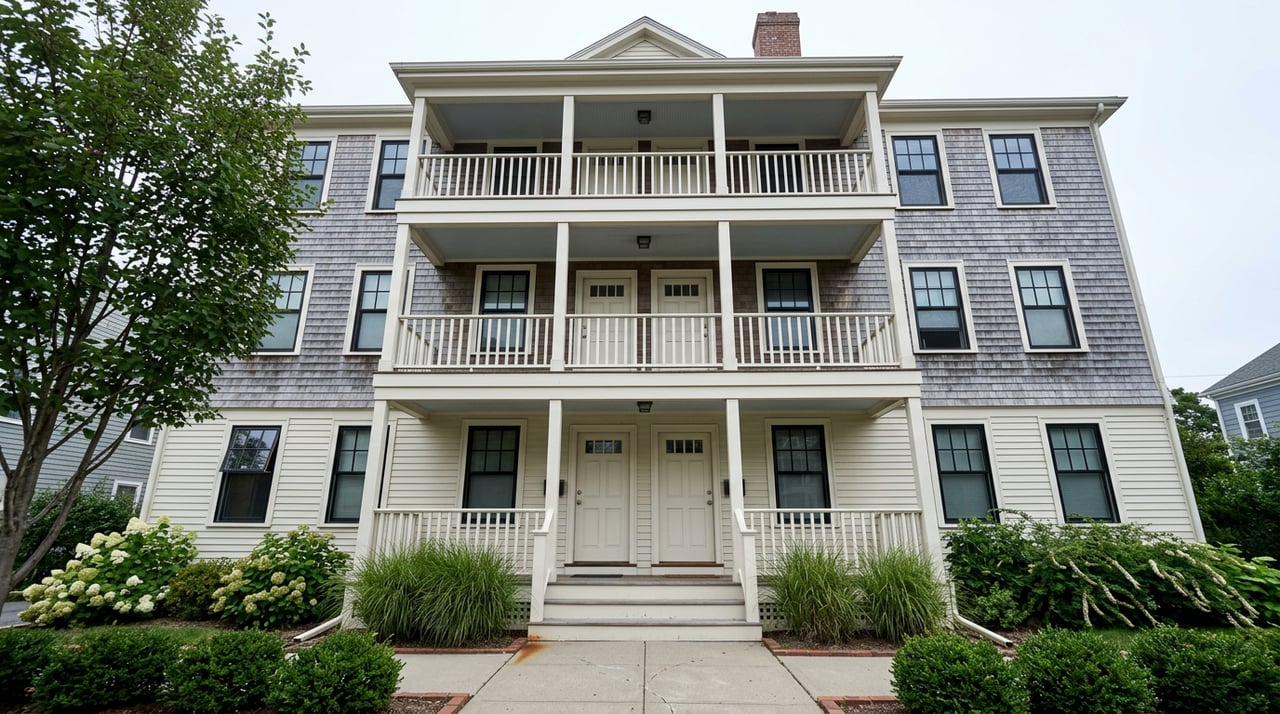
A triple-decker in Pawtucket's Darlington neighborhood sold for $716,000 a few years back, the highest price ever paid for a three-family home in the city at the time, according to Providence Business News. The systems work, new wiring, new plumbing, central air, granite counters, had been finished years before the sale closed. By the time it changed hands, none of that renovation was a question mark for the buyer.
Most Pawtucket triple-deckers do not have that kind of head start. They were built between the 1880s and 1920s, they carry the same lead paint that almost every pre-1978 Rhode Island home carries, and their owners are often landlords who did the minimum required to keep renting, not the extra work required to sell. That gap between renting-compliant and selling-compliant is where deals lose their timeline, and it has nothing to do with staging, pricing, or curb appeal.
The Paperwork You Already Have Isn't the Paperwork You Need
If you've rented out a Pawtucket two- or three-family for any length of time, you almost certainly have a Certificate of Lead Conformance on file. Rhode Island requires it for pre-1978 rental units, the state's rental registry checks for it, and you renew it every two years or whenever a tenant turns over, whichever comes first. It's real paperwork, issued after a licensed inspector runs a visual assessment and dust-wipe test on the unit.
Here's the part that catches sellers off guard: that certificate does not exempt your sale from the state's mandatory 10-day lead inspection period. Rhode Island's lead disclosure rule gives buyers of any one- to four-unit dwelling built before 1978 a full 10 days to conduct their own lead inspection before they're contractually obligated to close, and the only paperwork that removes that requirement entirely is a Full Lead-Safe Certificate or a Certification of Lead-Free Status. The everyday rental certificate you already have doesn't qualify.
Here's how the three documents actually compare:
| What you might have | What it actually confirms | Does it remove the buyer's 10-day right? |
|---|---|---|
| Signed lead disclosure form | You've told the buyer what you know; nothing has been tested | No. This is what starts the 10-day clock, not what stops it |
| Certificate of Lead Conformance | The unit passed a visual and dust-wipe inspection at the time it was issued; valid two years or until tenant turnover | No. This satisfies rental registry rules, not the sale exemption |
| Full Lead-Safe Certificate or Lead-Free Certification | The property meets Rhode Island's higher lead-safe or lead-free standard | Yes. This is the only document type that removes the mandatory 10-day period |
There is one workaround short of full certification. A buyer and seller can agree in writing to shorten the 10-day window, but only if the seller has already fully complied with every other disclosure requirement first. In other words, you cannot negotiate your way out of the clock after an offer comes in. The only leverage you have is the leverage you built before you listed.
Why 10 Days Matters More in a Market That Moves in Weeks
Rhode Island is an attorney-closing state, which already adds days to a transaction compared to markets where a title company runs the closing. Layer a mandatory 10-day lead inspection period on top of that in a Pawtucket market where triple-deckers are drawing multiple offers and moving in a matter of weeks, and the math changes. Ten days isn't a rounding error in a fast sale. It's a meaningful fraction of the entire marketing-to-close window, and it's a fraction that only shrinks if the seller did the work in advance.
This isn't a fringe issue affecting a handful of odd properties. Two- to four-unit buildings make up roughly 41% of Pawtucket's housing stock, according to the city's most recent Consolidated Plan, and the large majority of those units are renter-occupied. Add in that an estimated 70% of Rhode Island homes were built before 1978 and likely contain some lead paint, and the pattern becomes clear: this is the default condition of the Pawtucket multi-family market, not an exception buyers or sellers can plan around avoiding.
Cash buyers have built entire business models around this friction. One Pawtucket-focused cash-buyer service describes lead paint citations and buried oil tanks as routine issues on inherited triple-deckers, the kind of thing that "can stop retail sales cold" for buyers relying on financing, while their own investor network treats tank removal and lead remediation as a normal part of the rehab budget. That's a useful signal in itself: the friction is real enough that an entire acquisition strategy exists around sellers who'd rather not deal with it.
The New Construction Down the Street Isn't Playing by the Same Rules
Part of what makes this moment in Pawtucket interesting is what's already happened elsewhere in the city. Hope Artiste Village, the converted mill at 1005 Main Street, added 149 loft-style units to a building that already housed The Met, BreakTime Bowl and Bar, and Brick Oven on Main. The American Wire Lofts, built out of the former American Insulated Wire facility on Central Avenue, brought 143 renovated units with granite counters and stainless appliances into a market that had none of that a decade ago. And as of this July, a developer named Brad Clark is converting a 180 Weeden Street mill building, built in 1882, into 19 apartments with a fitness center, a pet spa, and work-from-home stations, targeting completion by early summer 2027.
None of those units come with a pre-1978 lead compliance clock attached, because they were rehabbed to modern code from the studs. That's the competitive backdrop every triple-decker seller in Pawtucket is up against. Renters and buyers increasingly have a lead-free, amenity-rich option down the street. An owner who lists a triple-decker with only a rental-era Certificate of Lead Conformance in hand isn't just risking a 10-day delay. They're asking a buyer to accept legacy friction in a market where the newest alternative has none.
What This Actually Means Before You List
None of this is a reason to panic about an old triple-decker. It's a reason to sequence the paperwork correctly. If you're planning to sell a pre-1978 Pawtucket multi-family in the next year, the question worth answering now, not after an offer arrives, is whether your existing lead documentation clears the sale-specific bar or only the rental bar. If it's only the rental bar, you have a choice: absorb the 10-day window as a known cost of doing business, or invest in the higher-tier certification before you list so the window disappears and your closing timeline looks like everyone else's.
This is exactly the kind of decision that benefits from someone who has stood on both sides of it. A background in general contracting means knowing what a lead remediation crew actually needs to do to a specific unit, and what that costs against what a fast, clean closing is worth. A background in loan origination means understanding how financing timelines and inspection contingencies interact in practice, not just on paper.
If you're weighing whether to remediate before listing, refinance a rental portfolio before selling, or figure out what your Pawtucket triple-decker is actually worth once the paperwork is sorted, that's a conversation worth having before the first showing, not after the first offer. Lindsay Pettinelli works with Pawtucket owners on exactly this kind of timing, and a Request a Free Home Valuation is the easiest way to start that conversation.
A Few Direct Questions
Can a buyer and seller just agree to skip the 10 days? Only partially. State rule allows the two parties to agree in writing to a shorter period, but that agreement is only valid if the seller has already fully complied with every other lead disclosure requirement. You can't use a handshake to erase a testing requirement you haven't met yet.
How long does a Certificate of Lead Conformance last once I get one? Two years from issuance, or until the unit has a new tenant, whichever happens first. That renewal clock is about the rental registry. It runs independently of whether you eventually sell.
Does full lead-safe certification actually raise the sale price, or just speed up the timeline? The clearest evidence in Pawtucket points to timeline and buyer pool, not a guaranteed price bump on its own. What the record-setting Darlington sale suggests is that full systems work, of which lead remediation is one piece, correlates with properties that sell at the top of the market. A clean lead certificate widens the pool of buyers who can finance the purchase without a contingency fight, which tends to support both speed and price, even if the certificate alone isn't the line item doing the heavy lifting.